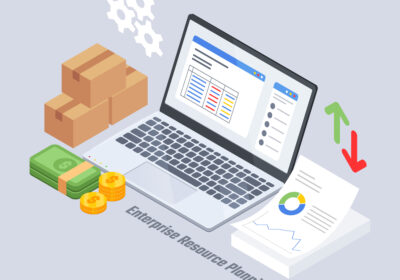
Enterprise Resource Planning (ERP) systems are often described as the backbone of modern businesses. They integrate finance, procurement, inventory, human resources, manufacturing, sales, customer service, and other core functions into a single platform, helping organizations improve efficiency and gain better visibility into operations.
Because ERP solutions are designed to support a wide range of business processes, many organizations assume that a standard implementation will meet their needs. The thinking is simple: install the software, configure a few settings, train employees, and the business will naturally become more efficient.
In reality, ERP success rarely works that way.
Every industry operates differently. A manufacturing company has vastly different priorities than a healthcare provider. A logistics business manages workflows that bear little resemblance to those of a retail chain. Even companies using the same ERP platform can have completely different operational requirements depending on their industry.
This is why businesses are increasingly moving away from generic ERP implementations and investing in industry-specific ERP strategies that align technology with the realities of their operations.
An ERP system should adapt to the business, not force the business to adapt to the software.
Every Industry Has Unique Operational Challenges
Although all businesses manage finances, customers, suppliers, and employees, the way they do so varies significantly.
A manufacturer needs production planning, quality control, and shop floor management.
A retailer focuses on inventory turnover, promotions, and omnichannel sales.
Healthcare organizations must prioritize patient records, compliance, and data privacy.
Construction firms require project costing, contractor management, and equipment tracking.
Hospitality businesses depend on reservations, occupancy management, and guest experiences.
Trying to manage these vastly different processes with a one-size-fits-all ERP approach often leads to unnecessary customization, inefficient workflows, and frustrated users.
The most successful ERP implementations begin by understanding how an industry actually operates before configuring the technology.
Generic ERP Implementations Often Create Workarounds
One of the earliest warning signs of a poorly aligned ERP system is the emergence of manual workarounds.
Employees start relying on spreadsheets to complete routine tasks.
Departments create their own databases.
Information is maintained outside the ERP because it is easier than using the system.
These workarounds usually indicate that the ERP is not supporting real business processes effectively.
Instead of improving efficiency, the system introduces additional administrative work.
Industry-specific ERP strategies reduce the need for these workarounds by designing workflows around how employees actually perform their jobs.
Regulatory Requirements Differ Across Industries
Compliance is another major reason businesses need tailored ERP strategies.
Every industry operates under its own regulatory framework.
Manufacturers may need detailed quality documentation.
Healthcare providers must manage sensitive patient information.
Financial institutions face strict reporting and audit requirements.
Food manufacturers require traceability across the supply chain.
Construction companies often manage project-specific compliance documentation.
A generic ERP implementation may support basic compliance features, but industry-specific strategies ensure that regulatory requirements are embedded directly into everyday business processes.
This reduces operational risk while simplifying audits and reporting.
Industry-Specific Data Drives Better Decision-Making
Business leaders depend on ERP systems for reporting and analytics.
However, useful insights depend on tracking the right information.
A logistics company may monitor fleet utilization and delivery performance.
A retailer focuses on inventory turnover and customer purchasing patterns.
Manufacturers analyze production efficiency, equipment utilization, and defect rates.
Professional service firms prioritize resource allocation and project profitability.
Generic dashboards often fail to provide these industry-specific metrics.
Organizations need reporting frameworks that reflect the key performance indicators relevant to their business model.
When ERP reporting aligns with operational priorities, leadership teams can make faster and more informed decisions.
Customer Expectations Vary Across Industries
Today’s customers expect faster service, greater transparency, and more personalized experiences.
These expectations differ depending on the industry.
Manufacturing customers may expect real-time production updates.
Retail customers want accurate inventory visibility and flexible fulfillment options.
Healthcare patients expect secure digital access to records and appointments.
Logistics clients demand shipment tracking and delivery notifications.
Meeting these expectations requires ERP workflows that support industry-specific customer journeys rather than generic transaction processing.
Businesses that tailor ERP systems around customer expectations often improve both operational efficiency and customer satisfaction.
Digital Transformation Is Not One-Size-Fits-All
Digital transformation affects every industry differently.
Manufacturers increasingly adopt Industrial IoT and predictive maintenance.
Retailers invest in AI-driven personalization and omnichannel commerce.
Healthcare providers implement telemedicine and digital patient engagement.
Construction companies adopt Building Information Modeling (BIM) and connected project management platforms.
Because technology priorities vary, ERP strategies must also evolve differently.
An industry-specific ERP roadmap ensures that future innovations can be integrated without disrupting core operations.
Rather than simply modernizing software, businesses modernize the way they operate.
Industry Expertise Reduces Implementation Risk
ERP implementation is one of the most significant technology investments an organization can make.
Projects often involve multiple departments, business-critical data, and operational processes.
Without industry expertise, implementation teams may overlook essential workflows or configure the system based on assumptions rather than operational realities.
This increases the likelihood of:
- delayed deployments,
- low user adoption,
- expensive customizations,
- operational disruptions,
- and higher long-term maintenance costs.
Industry-specific implementation strategies reduce these risks by incorporating proven practices and practical knowledge from similar organizations.
AI and Automation Need Industry Context
Artificial intelligence is becoming an integral part of ERP platforms.
Businesses are using AI to automate approvals, forecast demand, optimize inventory, detect anomalies, and improve decision-making.
However, AI is only as effective as the business context behind it.
An AI model designed for retail inventory optimization cannot simply be applied to manufacturing production planning.
Similarly, automation workflows differ significantly between healthcare, logistics, construction, and financial services.
Industry-specific ERP strategies ensure that AI capabilities support operational objectives rather than creating generic automation that delivers limited value.
Scalability Depends on Business-Specific Architecture
Many organizations choose ERP systems with long-term growth in mind.
As businesses expand into new markets, introduce new products, or acquire other companies, operational complexity increases.
A generic implementation may work for current needs but struggle to support future expansion.
Industry-specific ERP strategies anticipate these growth patterns by designing scalable architectures that align with sector-specific requirements.
Whether expanding manufacturing facilities, opening new retail locations, or managing international supply chains, businesses benefit from ERP environments built for their industry’s growth trajectory.
Technology Should Support Competitive Advantage
An ERP system should not simply automate existing processes.
It should strengthen the organization’s competitive position.
When ERP workflows align with industry best practices, businesses can:
- improve operational efficiency,
- respond faster to market changes,
- enhance customer experiences,
- reduce compliance risks,
- and make more informed strategic decisions.
Technology becomes more than an operational tool, it becomes a driver of business performance.
This is difficult to achieve through a generic implementation that treats every business the same.
How Verbat Technologies Delivers Industry-Focused ERP Solutions
Verbat Technologies helps organizations implement ERP solutions that reflect the unique operational needs of their industries rather than relying on standardized deployment models.
Their expertise includes:
- Industry-specific ERP consulting
- ERP implementation and modernization
- ERP integration with enterprise applications
- Cloud ERP migration
- Business process analysis and optimization
- AI-enabled ERP solutions
- Digital transformation consulting
By understanding both technology and industry-specific workflows, Verbat helps businesses build ERP environments that improve efficiency, simplify operations, and support sustainable growth.
Final Thoughts
ERP systems are designed to manage business operations, but no two industries operate in exactly the same way.
A strategy that works for a manufacturing company may be completely unsuitable for a healthcare provider or a retail business. Attempting to force diverse business models into a generic ERP framework often results in unnecessary complexity, low user adoption, and missed opportunities for improvement.
The most successful organizations recognize that ERP implementation is not simply a software project.
It is a business transformation initiative.
By adopting industry-specific ERP strategies, businesses can align technology with operational realities, improve decision-making, strengthen compliance, and build a foundation that supports long-term innovation.
Because the real value of an ERP system does not come from how many features it offers.
It comes from how well it understands the business it is designed to support.