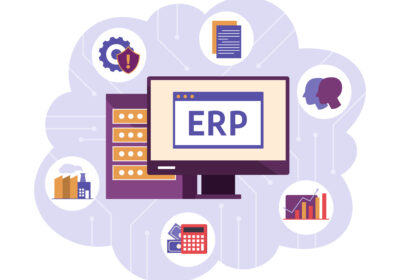
For many organizations, ERP dashboards are supposed to be the command center of the business.
Executives expect them to provide instant answers to critical questions. Operations teams rely on them to monitor performance. Finance departments use them to track business health. Leadership teams often view dashboards as the primary source of operational truth.
The promise is simple: open a dashboard and gain a real-time view of what is happening across the organization.
Yet despite significant investments in ERP software, business intelligence tools, and digital transformation initiatives, many organizations still struggle to achieve genuine real-time visibility.
The dashboards look impressive.
The charts are interactive.
The metrics update regularly.
But when critical decisions need to be made, teams often discover that the information displayed does not fully reflect what is actually happening across the business.
This raises an important question:
If modern ERP systems are more advanced than ever, why do so many dashboards still fail to provide true real-time visibility?
The answer lies in a combination of technology, processes, data quality, and organizational complexity.
Real-Time Data Is Only as Good as Its Source
One of the biggest misconceptions about ERP dashboards is that visualizing data automatically creates visibility.
In reality, dashboards simply display the information they receive.
If source data is delayed, incomplete, inconsistent, or inaccurate, the dashboard will faithfully present those problems in a visually appealing format.
Many organizations still rely on operational processes where data enters the system hours, or even days, after business events occur.
Inventory movements may not be recorded immediately. Financial transactions may await approval. Operational updates may depend on manual entries. Regional teams may update records according to different schedules.
As a result, the dashboard appears current while the underlying information is already outdated.
The problem is not the dashboard.
The problem is the data ecosystem feeding it.
ERP Systems Often Contain Multiple Versions of Reality
Modern businesses rarely operate entirely within a single ERP environment.
Most organizations use a combination of:
- CRM systems,
- ecommerce platforms,
- warehouse management solutions,
- HR software,
- finance applications,
- third-party logistics platforms,
- and industry-specific tools.
Although ERP systems act as central repositories, important business information often exists across multiple systems simultaneously.
When integrations are not fully synchronized, dashboards may display information that reflects only part of the operational picture.
For example, sales data may appear current while inventory information lags behind. Customer updates may arrive instantly while procurement data updates several hours later.
The dashboard appears unified.
The reality is fragmented.
Integration Delays Create Invisible Gaps
Integration has become one of the most significant barriers to real-time visibility.
Organizations frequently assume that once systems are connected, data flows instantly between them.
In practice, many integrations operate through scheduled synchronization cycles.
Data may move:
- every hour,
- every few hours,
- overnight,
- or according to predefined update schedules.
For reporting purposes, these delays may seem insignificant.
But in fast-moving business environments, even a one-hour delay can affect decision-making.
Supply chain disruptions, inventory shortages, customer demand fluctuations, and operational incidents often require immediate visibility.
When integrations lag, dashboards become historical reporting tools rather than real-time operational assets.
Dashboards Often Measure What Is Easy, Not What Matters
Another reason ERP dashboards fall short is that organizations frequently prioritize measurable metrics over meaningful metrics.
Most ERP platforms can easily track:
- transactions,
- orders,
- invoices,
- inventory counts,
- and operational activities.
However, business leaders increasingly need visibility into more complex questions.
They want to understand:
- customer experience trends,
- operational risks,
- workforce productivity,
- project performance,
- supplier reliability,
- and emerging business challenges.
Many of these insights require data from multiple sources and contextual analysis rather than simple transactional reporting.
As a result, dashboards may display hundreds of metrics while still failing to answer the questions decision-makers actually care about.
Data Quality Problems Become Dashboard Problems
ERP dashboards are often blamed for visibility issues that actually originate in data governance.
Poor data quality remains one of the most persistent challenges in enterprise technology.
Organizations frequently struggle with:
- duplicate records,
- inconsistent naming conventions,
- missing information,
- outdated entries,
- and manual data errors.
When these issues exist across business systems, dashboards inevitably reflect them.
Users begin questioning:
- report accuracy,
- KPI reliability,
- forecasting outputs,
- and operational metrics.
Eventually, confidence in the dashboard declines.
And once trust in reporting is lost, visibility becomes difficult to restore regardless of how sophisticated the dashboard technology may be.
Real-Time Visibility Requires Real-Time Processes
Technology alone cannot create operational transparency.
Many organizations invest heavily in reporting platforms while maintaining processes that were never designed for real-time decision-making.
For example, approvals may still require multiple manual steps. Operational updates may depend on spreadsheets. Regional teams may follow different reporting procedures.
Under these conditions, dashboards can only provide visibility into delayed processes.
Achieving real-time insight often requires organizations to redesign workflows, automate operational activities, and improve process discipline, not simply upgrade reporting tools.
In many cases, process modernization has a greater impact on visibility than dashboard customization.
User Adoption Remains a Hidden Challenge
Even when dashboards provide accurate information, visibility can still fail if employees do not use them effectively.
Different departments often interpret metrics differently.
Some teams continue relying on spreadsheets they trust more than centralized dashboards. Others build separate reports to compensate for perceived gaps in ERP reporting.
Over time, multiple reporting environments emerge across the organization.
Instead of creating a single source of truth, businesses end up with competing versions of operational reality.
The issue is not access to data.
It is the absence of consistent adoption and governance.
The Demand for Real-Time Decisions Is Growing
Business environments are becoming increasingly dynamic.
Organizations must now respond rapidly to:
- market shifts,
- supply chain disruptions,
- customer behavior changes,
- operational incidents,
- and competitive pressures.
As decision cycles shorten, expectations for visibility continue rising.
Dashboards that were considered effective a few years ago may no longer meet current operational demands.
Leaders increasingly expect insights that are:
- immediate,
- predictive,
- contextual,
- and actionable.
Traditional reporting models often struggle to support this level of responsiveness.
AI Is Changing Expectations Around Visibility
Artificial intelligence is introducing a new layer to business intelligence.
Organizations no longer want dashboards that simply display information.
They increasingly want systems that:
- identify anomalies,
- predict risks,
- recommend actions,
- and highlight emerging opportunities automatically.
This shift is changing how businesses think about visibility.
The future of ERP reporting is moving beyond static dashboards toward intelligent decision-support ecosystems.
Simply presenting data is no longer enough.
Businesses increasingly need systems capable of transforming information into actionable insight.
Visibility Is Ultimately a Business Challenge
One of the most important lessons organizations learn is that visibility problems are rarely caused by dashboards alone.
They typically originate from broader issues involving:
- data quality,
- integration strategy,
- process maturity,
- governance,
- user adoption,
- and operational consistency.
A dashboard can only reflect the health of the ecosystem behind it.
If that ecosystem contains delays, inconsistencies, or fragmentation, visibility will remain limited regardless of how advanced the reporting interface becomes.
How Verbat Technologies Helps Organizations Build True ERP Visibility
Verbat Technologies helps organizations transform ERP environments into connected, insight-driven ecosystems that support real-time decision-making.
Their expertise includes:
- ERP implementation and modernization,
- enterprise integration,
- data governance,
- business intelligence solutions,
- cloud-based ERP ecosystems,
- and operational visibility frameworks designed for modern enterprises.
By addressing the underlying challenges of data quality, integration, and process alignment, Verbat helps businesses move beyond dashboard reporting toward genuine operational intelligence.
Final Thoughts
ERP dashboards were designed to improve business visibility.
Yet many organizations still struggle to obtain the real-time insights they expected from their technology investments.
The reason is simple: dashboards do not create visibility on their own.
They depend on the quality of the systems, processes, integrations, and data that support them.
True real-time visibility requires far more than attractive charts and KPI widgets.
It requires a connected business ecosystem where information flows accurately, consistently, and immediately across every operational layer.
Because in modern enterprises, the challenge is no longer collecting data.
The challenge is ensuring that the data decision-makers see reflects what is actually happening right now.