For decades, ERP systems have been the operational backbone of enterprises. They helped businesses centralize finance, procurement, inventory, manufacturing, human resources, and other core functions within a single platform. The promise was simple: one system, one source of truth, and one integrated way of managing the business.
For a long time, this approach worked well.
But business environments have changed dramatically.
Organizations today operate in a world shaped by rapid technological innovation, evolving customer expectations, digital ecosystems, remote work models, AI-driven decision-making, and increasingly specialized business requirements. As companies adapt to these changes, many are discovering that traditional ERP systems often struggle to keep pace.
This realization is driving a major shift across industries.
Businesses are moving away from the idea of a single monolithic ERP platform and embracing a more flexible approach known as the Composable ERP Ecosystem.
Rather than relying on one massive application to handle every business process, organizations are building interconnected environments where specialized solutions work together seamlessly.
The result is an ERP strategy designed for agility, adaptability, and continuous evolution.
Why Traditional ERP Models Are Facing New Challenges
Traditional ERP systems were designed during an era when business processes were relatively stable.
Companies typically selected an ERP platform, customized it extensively, and expected it to serve the organization for many years with minimal structural changes.
The problem is that modern businesses no longer operate in stable environments.
Market conditions change rapidly. Customer expectations evolve constantly. New technologies emerge every year. Regulatory requirements shift. Competitive pressures increase.
Organizations now need technology environments that can adapt quickly.
Unfortunately, traditional ERP platforms often become difficult to modify because of:
- complex customizations,
- rigid architectures,
- lengthy upgrade cycles,
- expensive implementation projects,
- and tightly coupled business processes.
As a result, businesses frequently find themselves constrained by systems that were originally intended to improve operational flexibility.
The Rise of Best-of-Breed Business Applications
One of the biggest drivers behind composable ERP is the growth of specialized software solutions.
Today, businesses can choose from highly sophisticated applications for:
- customer relationship management,
- supply chain management,
- human resources,
- analytics,
- procurement,
- ecommerce,
- project management,
- and industry-specific operations.
These solutions often provide deeper functionality than traditional ERP modules.
Rather than forcing every business process into a single platform, organizations increasingly prefer selecting the tools that best fit their specific requirements.
The challenge then becomes integration.
Composable ERP addresses this challenge by creating a framework where multiple applications work together as part of a unified ecosystem.
Flexibility Is Becoming More Valuable Than Standardization
For many years, ERP strategies focused heavily on standardization.
The objective was to create consistent processes across the organization, often by requiring business units to adapt to the software.
While standardization remains important, modern enterprises are placing greater value on flexibility.
Different departments, business units, and geographic regions often have unique operational needs.
A global manufacturer may require different workflows than a retail division. Regional offices may operate under different regulations. New business models may demand entirely new processes.
Composable ERP allows organizations to adapt more easily without disrupting the entire enterprise technology landscape.
Instead of modifying a monolithic system, businesses can introduce or replace specific components as needs evolve.
Integration Has Become the New Foundation
The success of traditional ERP systems depended largely on centralization.
The success of composable ERP depends on integration.
Modern organizations increasingly rely on APIs, cloud platforms, middleware solutions, and integration frameworks to connect business applications.
In a composable environment, information flows between systems while allowing each application to perform its specialized role.
For example:
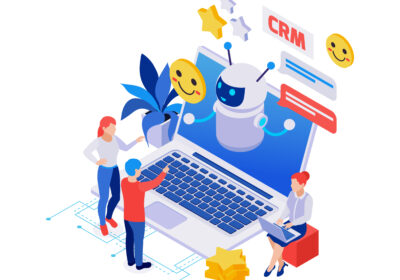
A CRM platform manages customer interactions.
An ERP platform handles financial operations.
A supply chain solution manages logistics.
An analytics platform generates business insights.
Together, these systems create a connected ecosystem capable of delivering operational visibility without requiring every function to reside within a single application.
This integration-first approach is becoming a defining characteristic of next-generation enterprise architecture.
Cloud Adoption Is Accelerating the Shift
The growth of cloud computing has made composable ERP significantly more practical.
Traditional ERP implementations often required extensive infrastructure investments and lengthy deployment cycles.
Cloud-based platforms offer a different model.
Organizations can deploy specialized solutions quickly, scale resources as needed, and integrate services more efficiently than before.
Cloud environments also support continuous innovation.
Businesses can adopt new capabilities without waiting for major ERP upgrades or undertaking large-scale system replacements.
As cloud adoption continues expanding, composable architectures are becoming increasingly attractive for organizations seeking greater agility.
AI and Advanced Analytics Require Greater Agility
Artificial intelligence is changing how businesses use enterprise technology.
Organizations increasingly want to incorporate:
- predictive analytics,
- intelligent automation,
- machine learning,
- AI-powered assistants,
- and real-time decision support.
Traditional ERP environments can struggle to integrate emerging technologies rapidly.
Composable ERP ecosystems offer greater flexibility because organizations can add specialized AI services without redesigning core systems.
This allows businesses to experiment, innovate, and scale new capabilities more effectively.
As AI becomes a central component of enterprise operations, the ability to integrate new technologies quickly will become a major competitive advantage.
Business Expansion Demands Adaptability
Growth often exposes the limitations of traditional ERP environments.
As organizations expand into:
- new markets,
- additional countries,
- new business units,
- acquisitions,
- and digital business models,
their operational requirements become increasingly diverse.
Monolithic ERP systems frequently require extensive customization to support these changes.
Composable ERP ecosystems provide a more adaptable framework.
Businesses can integrate new applications, connect acquired systems, or introduce region-specific capabilities without fundamentally disrupting the entire enterprise environment.
This adaptability is particularly valuable for organizations pursuing aggressive growth strategies.
Governance Becomes More Important Than Ever
While composable ERP offers significant flexibility, it also introduces new responsibilities.
The success of a composable ecosystem depends on strong governance.
Without proper oversight, organizations risk creating:
- integration complexity,
- inconsistent data models,
- duplicated functionality,
- security vulnerabilities,
- and fragmented user experiences.
This is why successful composable ERP strategies focus not only on technology selection but also on architecture management, integration standards, data governance, and operational discipline.
Flexibility without governance can quickly lead to complexity.
The most successful organizations balance both.
Composable ERP Supports Continuous Evolution
Perhaps the greatest advantage of composable ERP is that it aligns with how businesses now evolve.
Technology decisions no longer have lifespans measured in decades.
Business priorities change faster than ever.
Organizations increasingly need systems that can evolve incrementally rather than requiring major transformation projects every few years.
Composable ERP enables this approach.
Instead of replacing entire platforms, businesses can modernize individual capabilities as requirements change.
This reduces disruption while improving the organization’s ability to respond to new opportunities.
The Future ERP Ecosystem Will Be Connected, Intelligent, and Modular
The ERP systems of the future will look very different from the monolithic platforms of the past.
They will be:
- highly integrated,
- cloud-native,
- AI-enabled,
- modular,
- and designed around interoperability.
Rather than serving as isolated systems, ERP platforms will operate as part of broader digital ecosystems connecting employees, customers, suppliers, partners, and intelligent technologies.
The focus will shift from owning a single platform to orchestrating a network of specialized capabilities.
How Verbat Technologies Helps Organizations Build Composable ERP Ecosystems
Verbat Technologies helps organizations modernize ERP environments by designing flexible, scalable, and integration-driven enterprise ecosystems.
Their expertise includes:
- ERP consulting and implementation,
- cloud ERP modernization,
- enterprise application integration,
- API strategy and development,
- digital transformation initiatives,
- AI-enabled business solutions,
- and composable architecture design.
By helping businesses move beyond rigid ERP models, Verbat enables organizations to create enterprise technology environments that support continuous innovation, operational agility, and long-term growth.
Final Thoughts
Traditional ERP systems transformed business operations by bringing core processes together within a unified platform.
But the demands of modern business are changing.
Organizations now need technology environments that can adapt as quickly as markets, customers, and opportunities evolve.
Composable ERP ecosystems provide a path forward by combining the stability of enterprise systems with the flexibility of modern digital architecture.
The goal is no longer to find one platform capable of doing everything.
It is to create an ecosystem where the right technologies work together seamlessly to support business growth.
Because in today’s enterprise landscape, agility is becoming just as important as integration—and the future of ERP will belong to organizations that can achieve both.