There was a time when choosing a technology platform felt like making a long-term commitment. Businesses would invest in a system and expect it to support operations for the better part of a decade. ERP platforms, development frameworks, infrastructure stacks, even customer management systems were all treated as stable foundations that wouldn’t need major reconsideration anytime soon.
That’s no longer how the market works.
Today, many technology decisions begin losing strategic relevance in less than three years. Not because the systems stop functioning, but because the business environment around them changes too quickly.
And that shift is forcing organizations to rethink what “long-term technology planning” even means.
Technology Is Stable. Business Environments Aren’t.
Most modern platforms are technically reliable. They scale well, receive continuous updates, and support increasingly advanced capabilities.
But businesses are no longer evaluating technology based only on whether it works.
They’re evaluating whether it will still fit:
- changing customer expectations,
- evolving operational models,
- growing integration requirements,
- and rapidly shifting market demands.
That distinction matters.
A platform can remain fully functional while becoming strategically limiting at the same time.
Markets Are Evolving Faster Than Systems Can Adapt
One of the biggest reasons technology lifespans are shrinking is the sheer speed of market evolution.
Business models are changing faster than they used to. Customer expectations evolve continuously. New competitors appear quickly, often built entirely around newer technologies and more flexible operating models.
At the same time, organizations are constantly adapting:
- introducing new digital services,
- expanding into new markets,
- automating operations,
- integrating AI into workflows,
- and restructuring how teams collaborate.
Technology decisions that once felt modern can start feeling restrictive surprisingly fast when the business itself changes direction.
AI Has Compressed Technology Timelines Even Further
Artificial intelligence has accelerated this shift dramatically.
A few years ago, businesses evaluated software based on:
- functionality,
- performance,
- and scalability.
Now they’re also asking:
- Can this system integrate with AI tools?
- Can it support automation?
- Can it adapt to intelligent workflows?
- Can it process real-time data efficiently?
A platform that lacks flexibility in these areas can begin feeling outdated long before its technical lifespan ends.
The challenge isn’t obsolescence in the traditional sense.
It’s the speed at which expectations are evolving.
The Rise of Continuous Transformation
Digital transformation used to happen in phases. Organizations would modernize systems every few years through large-scale projects.
Now transformation is continuous.
Businesses are constantly:
- adding new tools,
- integrating new services,
- redesigning customer experiences,
- and experimenting with new operational models.
That creates a very different environment for technology planning.
Instead of supporting static operations, systems now need to support constant adaptation. And many traditional technology decisions simply weren’t designed for that level of flexibility.
Vendor Ecosystems Change Faster Than Expected
Another major factor is how quickly vendor ecosystems evolve.
Modern businesses rely heavily on external platforms:
- SaaS products,
- cloud providers,
- API ecosystems,
- analytics platforms,
- automation tools.
But vendors themselves change constantly.
Pricing structures shift. Features get deprecated. Product roadmaps evolve. Companies merge, reposition, or prioritize different markets.
Which means businesses are no longer only managing their own technology decisions, they’re also managing the changing priorities of external providers.
That adds another layer of uncertainty to long-term planning.
Businesses Are Moving Away from Permanent Architectures
One of the biggest structural shifts happening right now is the move away from tightly locked systems.
Earlier technology strategies focused on building around one central platform that handled everything.
Now organizations are increasingly adopting:
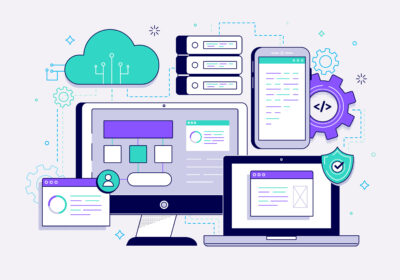
- modular systems,
- API-first architectures,
- composable environments,
- and integration-driven ecosystems.
Why?
Because businesses understand that change is inevitable.
Instead of trying to prevent change, they’re designing systems that can absorb it more easily.
Flexibility Is Becoming More Valuable Than Longevity
This is probably the biggest mindset shift of all.
For years, businesses searched for “future-proof” technology.
Now they’re realizing that truly future-proof systems may not exist in fast-moving markets.
What matters more is:
- adaptability,
- interoperability,
- scalability,
- and the ability to evolve without rebuilding everything from scratch.
In other words, flexibility is replacing permanence as the primary goal.
The Cost of Assuming Technology Will Last Too Long
The biggest problems usually appear when organizations assume a technology decision will remain strategically relevant for far longer than it realistically will.
That assumption often leads to:
- rigid architectures,
- heavy vendor dependency,
- poor integration planning,
- and growing technical debt.
Then when the business needs to evolve quickly, the technology becomes a bottleneck rather than an enabler.
At that point, companies face expensive migrations, operational disruption, and slower innovation cycles, all because the original system wasn’t designed for constant adaptation.
The Shift from “Future-Proof” to “Future-Ready”
This is where modern technology strategy is heading.
Businesses are no longer trying to predict what systems will remain perfect for the next ten years.
Instead, they’re focusing on building environments that can:
- evolve continuously,
- integrate easily,
- and adapt without major disruption.
That’s the difference between being future-proof and being future-ready.
One assumes stability.
The other assumes change.
And right now, change is the safer assumption.
How Verbat Technologies Helps Businesses Adapt to Shorter Technology Lifecycles
Verbat Technologies helps organizations build technology ecosystems designed for continuous evolution rather than long-term rigidity.
Their approach focuses on creating:
- modular architectures,
- scalable integration layers,
- API-first systems,
- and flexible digital environments that can adapt as business needs shift.
Instead of locking businesses into static technology structures, Verbat helps them build systems capable of evolving alongside rapidly changing markets and operational demands.
Final Thoughts
Technology decisions now have shorter business lifespans not because companies are making worse choices, but because the pace of change has fundamentally accelerated.
Markets evolve faster. Customer expectations shift more quickly. Innovation cycles are shorter than ever before.
In that environment, long-term success no longer depends on choosing systems that never need to change.
It depends on choosing systems that can change without slowing the business down.