When ERP performance issues arise, the ERP system is usually the first thing that gets blamed.
Users complain that reports take too long to load. Finance teams experience delays during month-end closing. Procurement workflows become sluggish. Inventory updates lag behind real-time operations. Dashboards fail to refresh quickly enough.
The immediate assumption is often simple:
The ERP is slow.
As a result, organizations begin exploring ERP upgrades, infrastructure investments, database tuning projects, or even complete platform replacements.
But in many cases, the ERP system itself is not the primary problem.
The real issue often exists somewhere outside the ERP environment.
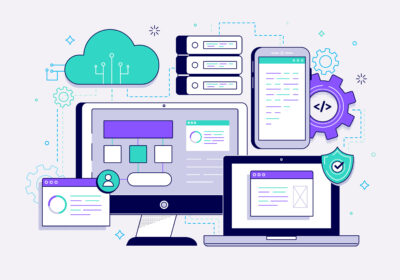
In today’s enterprise landscape, ERP platforms rarely operate in isolation. They are connected to dozens of applications, cloud services, APIs, analytics platforms, data warehouses, ecommerce systems, CRM solutions, and third-party tools. As these ecosystems become more complex, performance bottlenecks increasingly originate from the surrounding technology environment rather than the ERP itself.
This is why many organizations discover that improving ERP performance requires looking beyond the ERP platform.
The Modern ERP Is No Longer a Standalone System
Traditional ERP systems were designed to serve as centralized business platforms.
Most core processes operated within a single environment, making performance management relatively straightforward.
Today, the situation is very different.
Modern ERP environments interact continuously with:
- CRM platforms
- Supply chain systems
- Ecommerce applications
- Customer service solutions
- Business intelligence tools
- Cloud databases
- HR platforms
- AI and analytics services
- Third-party vendor systems
Every transaction may involve multiple systems exchanging information simultaneously.
When users experience delays, the ERP often becomes the visible point of frustration, even when the root cause exists elsewhere in the technology ecosystem.
Integration Bottlenecks Are a Growing Problem
One of the most common causes of ERP performance issues is integration overload.
As organizations expand digital capabilities, they continuously add new connections between systems.
Each integration introduces additional processing requirements.
Data must be:
- extracted,
- transformed,
- validated,
- synchronized,
- and transferred.
Individually, these integrations may operate effectively.
Collectively, however, they can create significant strain on enterprise environments.
When integrations become inefficient, users often experience slower ERP performance even though the ERP itself is functioning normally.
The platform is essentially waiting for external systems to complete their part of the process.
Poor Data Quality Creates Hidden Performance Issues
Many organizations view data quality as a governance challenge rather than a performance challenge.
In reality, the two are closely connected.
ERP systems depend on accurate and structured information to operate efficiently.
When organizations accumulate:
- duplicate records,
- inconsistent master data,
- outdated information,
- redundant transactions,
- or fragmented datasets,
the ERP must process increasingly complex workloads.
Over time, this can affect reporting performance, transaction speeds, and system responsiveness.
The ERP becomes slower not because the software is inadequate, but because it is being forced to manage growing volumes of inefficient data.
Reporting Demands Often Overwhelm Operational Systems
Business leaders want faster access to information than ever before.
Executives expect real-time dashboards.
Managers want instant operational visibility.
Finance teams require advanced analytics.
To meet these expectations, organizations frequently run large reporting workloads directly against ERP environments.
This creates a significant challenge.
ERP systems are optimized primarily for transactional processing.
Their primary responsibility is executing business operations.
When extensive analytics and reporting activities are layered onto the same environment, performance can suffer.
Many perceived ERP performance issues actually stem from reporting demands that exceed what the operational system was originally designed to support.
API Ecosystems Can Slow Everything Down
Modern enterprises increasingly rely on APIs to connect applications.
ERP platforms now communicate with multiple external services through API-driven architectures.
These APIs support:
- customer interactions,
- financial transactions,
- inventory updates,
- workflow automation,
- supplier communications,
- and business intelligence processes.
The problem is that API performance directly affects ERP responsiveness.
A slow API call can delay an entire workflow.
An overloaded service can create bottlenecks across multiple business processes.
As organizations adopt more connected architectures, API performance becomes a critical factor in overall ERP efficiency.
Yet these issues are often misidentified as ERP problems.
Cloud Architecture Decisions Matter More Than Ever
Cloud adoption has transformed enterprise technology.
Many organizations have migrated ERP environments to cloud infrastructure expecting immediate performance improvements.
However, cloud migration alone does not guarantee better outcomes.
Poor architectural decisions can create:
- latency issues,
- inefficient data movement,
- resource allocation problems,
- network bottlenecks,
- and integration delays.
In some cases, organizations discover that cloud-related inefficiencies affect ERP performance more significantly than the ERP platform itself.
This is particularly common in environments where multiple cloud services operate across different regions or providers.
Legacy Systems Continue to Create Friction
Many enterprises operate hybrid environments where modern ERP platforms coexist alongside legacy applications.
While ERP systems may have evolved, older technologies often remain deeply embedded within business processes.
These legacy systems can introduce:
- slow data transfers,
- outdated communication protocols,
- manual synchronization requirements,
- and integration limitations.
As ERP platforms attempt to interact with older systems, performance challenges emerge.
Users experience delays inside the ERP even though the bottleneck exists elsewhere.
The ERP becomes the visible symptom of a broader architectural problem.
AI and Automation Are Increasing Workloads
Organizations are rapidly introducing AI-powered capabilities into enterprise environments.
Examples include:
- predictive forecasting,
- intelligent process automation,
- anomaly detection,
- automated reporting,
- and decision-support systems.
These technologies create significant value.
They also generate additional demands on enterprise data and infrastructure.
Without proper architecture planning, AI workloads can increase pressure on ERP ecosystems.
Businesses sometimes assume AI-related delays indicate ERP weaknesses when the actual issue involves resource-intensive analytics or automation processes operating around the ERP.
User Experience Often Reveals Ecosystem Problems
One of the most interesting aspects of ERP performance troubleshooting is that users experience problems from the front end.
They simply see a process taking longer than expected.
What they cannot see is the chain of events happening behind the scenes.
A delayed screen may involve:
- multiple API calls,
- cloud service interactions,
- database queries,
- integration workflows,
- security validations,
- and reporting requests.
The ERP serves as the interface where users notice the problem.
The actual cause may exist anywhere within the broader technology landscape.
This is why effective performance management requires a holistic view of enterprise architecture.
Observability Is Becoming More Important Than Monitoring
Traditional ERP monitoring focused primarily on the ERP platform itself.
Modern enterprises need a broader perspective.
Organizations increasingly require end-to-end observability across:
- applications,
- integrations,
- APIs,
- databases,
- cloud services,
- networks,
- and user experiences.
Without this visibility, businesses risk treating symptoms rather than root causes.
Many organizations spend months optimizing ERP systems only to discover that the real bottleneck exists within an external dependency.
Comprehensive observability helps eliminate this guesswork.
ERP Performance Is Now an Ecosystem Challenge
The reality is that ERP performance can no longer be evaluated in isolation.
Enterprise systems have become deeply interconnected.
A high-performing ERP platform can still deliver poor user experiences if surrounding systems are inefficient.
Likewise, an organization may incorrectly blame its ERP for issues caused by integrations, APIs, cloud architecture, reporting workloads, or data management challenges.
As digital ecosystems continue expanding, performance optimization increasingly becomes an enterprise-wide initiative rather than an ERP-specific project.
How Verbat Technologies Helps Organizations Improve ERP Performance
Verbat Technologies helps organizations optimize ERP environments by addressing performance challenges across the entire enterprise ecosystem rather than focusing solely on the ERP platform itself.
Their expertise includes:
- ERP modernization and optimization
- Enterprise application integration
- API architecture and performance management
- Cloud migration and infrastructure optimization
- Data governance and management
- Enterprise observability solutions
- Digital transformation consulting
By helping businesses identify performance bottlenecks across interconnected systems, Verbat enables organizations to improve operational efficiency, user experience, and decision-making without unnecessary ERP replacement projects.
Final Thoughts
When ERP performance declines, the ERP system is often the first suspect.
But in modern enterprises, the real cause frequently lies elsewhere.
Integrations, APIs, cloud environments, reporting workloads, legacy systems, and data quality issues all influence how ERP platforms perform.
Focusing exclusively on the ERP can lead organizations toward expensive solutions that fail to address the underlying problem.
The most successful businesses recognize that ERP performance is no longer just an ERP issue.
It is an ecosystem issue.
Because in today’s interconnected enterprise environment, the speed of your ERP is often determined by everything connected to it.