Continuous delivery is often presented as the natural evolution of modern software engineering.
Code is committed, tested, packaged, deployed, and monitored through an automated pipeline. The objective sounds straightforward: reduce manual intervention, shorten release cycles, and make software changes safer and more predictable.
But enterprise continuous delivery pipelines are rarely simple.
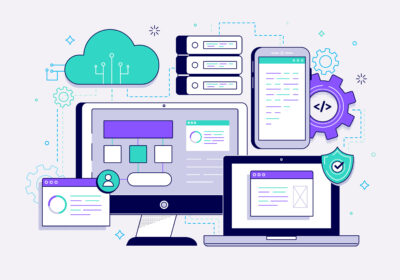
Behind a seemingly automated deployment can sit dozens of interconnected components: source control, build systems, dependency management, security scanning, infrastructure provisioning, testing environments, approval workflows, deployment orchestration, observability platforms, secrets management, cloud services, and third-party integrations.
The pipeline may look like a single workflow.
Operationally, it is a distributed system responsible for changing another distributed system.
That distinction explains why continuous delivery becomes increasingly complex as organisations scale.
The Pipeline Is More Than a Deployment Script
A basic pipeline might follow a simple sequence:
Code → Build → Test → Deploy
Enterprise pipelines rarely stop there.
A production delivery process may also involve:
- Dependency resolution
- Container image creation
- Infrastructure provisioning
- Unit, integration, regression, and performance testing
- Security and vulnerability scanning
- Secrets management
- Compliance checks
- Artifact repositories
- Environment configuration
- Database migrations
- Change approvals
- Deployment strategies
- Monitoring and observability
- Rollback mechanisms
- Audit logging
Each additional control can improve reliability or security.
But every additional dependency also introduces another potential failure point.
The result is a fundamental engineering trade-off: more sophisticated pipelines can provide stronger controls while simultaneously creating more operational complexity.
Pipeline Failures Are Not Always Code Failures
One of the biggest misconceptions about continuous delivery is that a failed deployment necessarily indicates a problem with the application.
It may not.
A pipeline can fail because:
- A dependency repository is unavailable.
- A container registry is experiencing an outage.
- A security scanner times out.
- A cloud API changes behaviour.
- A deployment credential expires.
- An infrastructure module becomes incompatible.
- A test environment is unavailable.
- A build agent runs out of capacity.
- A configuration variable is missing.
- A third-party service changes its API.
The application code may be perfectly functional.
Yet the organisation cannot release it.
This means engineering teams need to treat the delivery pipeline itself as production-critical infrastructure.
More Automation Creates More Dependencies
Automation removes manual work, but it does not remove dependencies.
It often creates more of them.
A modern pipeline might connect Git repositories to CI platforms, artifact repositories, cloud infrastructure, security tools, testing frameworks, deployment platforms, observability systems, and ticketing or approval systems.
A failure anywhere along that chain can interrupt delivery.
This creates a less obvious operational challenge.
The reliability of the delivery process is constrained by the weakest critical dependency within it.
As pipelines become more integrated, dependency mapping becomes increasingly important.
Pipeline Configuration Is Becoming Software
Another source of hidden complexity is pipeline configuration itself.
CI/CD pipelines increasingly contain substantial amounts of executable logic.
They define:
- Build conditions
- Environment variables
- Deployment rules
- Security gates
- Test execution
- Infrastructure changes
- Rollback behaviour
- Branch policies
- Approval requirements
At sufficient scale, pipeline configuration begins to resemble application code.
Yet organisations do not always apply the same engineering discipline to it.
Poorly governed pipeline code can introduce fragile dependencies, duplicated logic, hidden assumptions, and difficult-to-debug failures.
Treating pipelines as disposable configuration rather than software can therefore create long-term technical debt.
Security Becomes Part of the Delivery Architecture
Continuous delivery also expands the security boundary.
A pipeline may have access to source code, cloud infrastructure, deployment credentials, production environments, artifact repositories, and secrets.
That makes the pipeline itself an attractive target.
A compromised build agent or stolen deployment credential can potentially provide a path into production systems.
Security therefore cannot simply be added as a final scanning stage.
It needs to exist throughout the delivery process.
This includes:
- Protecting build environments
- Securing pipeline credentials
- Managing secrets centrally
- Restricting permissions
- Validating third-party dependencies
- Signing and verifying artifacts
- Securing deployment infrastructure
- Monitoring pipeline activity
- Maintaining audit trails
The more powerful the pipeline becomes, the more carefully its privileges need to be controlled.
Testing Can Become the Bottleneck
Continuous delivery depends heavily on automated testing.
But more testing does not automatically mean faster delivery.
As applications grow, test suites can become increasingly large and slow.
A pipeline that once completed in minutes may eventually take significantly longer because of integration tests, end-to-end tests, security checks, performance tests, and environment provisioning.
Teams then face a difficult balance.
Reduce testing and increase delivery risk.
Run everything and increase delivery time.
The solution is usually not simply to add more computing capacity. Testing strategies need to become more intelligent, with appropriate separation between fast feedback tests and slower validation stages.
Infrastructure Changes Increase Pipeline Risk
Modern applications frequently depend on infrastructure that is managed through code.
This is powerful because infrastructure changes can be versioned, reviewed, tested, and automated.
But it also means the delivery pipeline may modify more than application code.
A deployment can potentially change:
- Compute resources
- Networks
- Databases
- Access policies
- Load balancers
- Storage
- Kubernetes resources
- Cloud configurations
An error in infrastructure automation can therefore have consequences far beyond an application defect.
This makes infrastructure-as-code validation, controlled permissions, change management, and rollback strategies critical components of continuous delivery.
Database Changes Are Particularly Difficult
Application deployments and database changes do not always evolve at the same speed.
A new application version may require a schema change, while existing application instances may still depend on the previous schema.
This creates compatibility challenges during rolling deployments and rollback scenarios.
A pipeline that handles application deployment perfectly can still fail because database migrations were not designed for incremental change.
Enterprise continuous delivery therefore requires teams to think about application compatibility across deployment states, not just the final desired state.
The Pipeline Can Become a Bottleneck
Continuous delivery is intended to accelerate software delivery.
But poorly designed pipelines can become bottlenecks themselves.
When every change must pass through a long sequence of mandatory checks, teams may begin to experience:
- Longer feedback cycles
- Queued builds
- Deployment contention
- Increased operational support
- More complex troubleshooting
- Pressure to bypass controls
That last problem is particularly dangerous.
When engineering teams perceive delivery controls as obstacles rather than safeguards, they may search for ways around them.
The objective should therefore be to design controls that are proportionate to risk without unnecessarily slowing engineering teams.
Observability Must Extend Into the Pipeline
Application observability is well established.
Pipeline observability receives less attention.
Yet engineering leaders need to understand questions such as:
- Which pipeline stages fail most frequently?
- How long does each stage take?
- Which dependencies cause delays?
- How often are deployments rolled back?
- How much time is spent waiting versus executing?
- Which teams or services create the most pipeline failures?
These metrics turn pipeline management from reactive troubleshooting into engineering optimisation.
The delivery system itself needs telemetry.
Continuous Delivery Requires Continuous Governance
The answer is not to simplify every pipeline into a minimal deployment script.
Enterprise environments need security, compliance, testing, reliability, and governance.
The challenge is designing these controls without creating an unmanageable delivery architecture.
That requires organisations to establish clear standards around:
Pipeline ownership. Every critical pipeline should have accountable owners.
Dependency management. External services and pipeline dependencies should be documented and monitored.
Security. Credentials, permissions, build environments, and artifacts require protection.
Standardisation. Common patterns can reduce unnecessary pipeline variation.
Observability. Pipeline performance and failures should be measurable.
Recovery. Rollback and failure-recovery mechanisms should be designed before they are needed.
Lifecycle management. Pipelines themselves require maintenance, upgrades, testing, and eventual retirement.
Continuous Delivery Is Infrastructure
The biggest shift in thinking is recognising that a CI/CD pipeline is no longer merely a tool for developers.
It is part of the organisation’s software delivery infrastructure.
When the pipeline is unavailable, software delivery stops.
When it is insecure, production systems may be exposed.
When it is unreliable, engineering productivity declines.
When it becomes excessively complex, teams lose confidence in the delivery process.
And when it is poorly governed, automation can amplify mistakes as quickly as it amplifies successful deployments.
Continuous delivery therefore should not be measured only by how frequently an organisation deploys.
The more important question is whether it can deliver changes quickly, securely, predictably, and recoverably as the technology environment becomes more complex.
The future of continuous delivery is not simply more automation.
It is better-engineered automation.