In 2025, every enterprise is a data company, whether they make software, deliver logistics, or manage construction projects. But as organizations adopt more SaaS tools, cloud platforms, and automation systems, one challenge quietly undermines their digital ambitions: data silos.
The truth is, data doesn’t generate value just by existing. It creates value when it’s connected, contextual, and accessible across the business. That’s where data interoperability and integration architecture step in, the foundation for a truly intelligent enterprise.
Let’s explore why integration, not isolation, will determine the winners in the data-driven decade ahead.
The Problem with Data Silos: Islands of Insight
Over the past few years, enterprises have adopted dozens of specialized systems, CRMs, ERPs, HRMS platforms, analytics dashboards, and custom-built apps.
While each system excels in its domain, the result is often fragmentation:
- Marketing doesn’t see what Sales sees.
- Finance can’t access real-time supply chain data.
- Operations lack visibility into customer sentiment.
These disconnected systems create data silos, isolated pockets of information that can’t communicate with each other. And the cost?
Lost time, inconsistent reporting, poor decisions, and a lack of agility when responding to market shifts.
In a business environment where speed and insight define competitiveness, silos are no longer a small inefficiency, they’re an existential barrier.
The Case for Data Interoperability
Data interoperability is the ability of systems, applications, and tools to exchange and interpret shared information seamlessly.
It’s not just about moving data between systems, it’s about ensuring that the meaning of that data remains consistent and actionable across every environment.
When interoperability becomes a core design principle:
- Teams work from a single version of truth.
- Decision-making becomes faster and more accurate.
- AI models can learn from richer, more complete datasets.
- Automation flows across departments without breaking.
In short, interoperability transforms fragmented systems into an ecosystem, and that’s the essence of a connected enterprise.
Integration Architecture: The Backbone of the Modern Enterprise
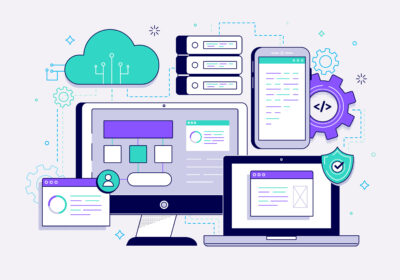
Interoperability doesn’t happen by accident. It’s engineered through integration architecture, a structured approach to connect systems, manage data flows, and orchestrate business logic across the enterprise.
The modern integration architecture goes beyond traditional APIs or middleware. It combines:
- Event-driven systems for real-time data exchange.
- API gateways that enforce security and consistency.
- Data fabric and mesh architectures for unified governance.
- AI-driven observability that ensures every integration remains efficient and transparent.
With this foundation, enterprises can innovate faster, launching new digital experiences, connecting legacy systems, and embedding intelligence across workflows without replatforming every tool.
Why 2025 Belongs to Integration-First Enterprises
In 2025, the businesses thriving in digital ecosystems are those that design for interoperability from day one. Here’s why:
- AI and automation demand unified data: Machine learning models are only as good as the data they access. Integrated systems feed richer insights into every algorithm.
- Cloud-native operations rely on seamless integration: Multi-cloud and hybrid environments need fluid data flow to prevent vendor lock-in.
- Compliance and security improve: Integration architectures allow centralized control and auditing without compromising performance.
- Faster innovation cycles: Teams can plug in new tools or services without months of redevelopment.
Simply put, integration is no longer an IT function; it’s a strategic business enabler.
How Verbat Helps Enterprises Build Interoperable Data Ecosystems
At Verbat Technologies, we believe the future belongs to connected enterprises, organizations that treat data not as a static asset, but as a living network of intelligence.
Our integration and interoperability solutions help enterprises:
- Build API-first architectures for scalable connectivity.
- Implement data fabric frameworks for seamless cross-platform communication.
- Enable AI-ready data ecosystems that power analytics and automation.
- Maintain governance and compliance while ensuring agility.
From retail to energy, from government to fintech, Verbat’s integration strategies ensure that your data works together, not apart.
From Data Chaos to Data Clarity
As we move deeper into the era of intelligent systems, the enterprises that win will be those that integrate faster, collaborate better, and see clearer.
The shift from data silos to interoperable systems isn’t just an IT modernization step, it’s a business transformation strategy.
Because in 2025 and beyond, your competitive advantage won’t come from how much data you own, but how seamlessly it flows.