For decades, enterprise software development was defined by process: ticketing systems, gated reviews, and strict handoffs. Pull requests became the industry’s gold standard for collaboration, code quality, and accountability. But in 2025, pull requests are no longer the full story.
Enterprise teams are realizing that social coding, the cultural and technical practices of working like open-source communities, shapes not just how code is merged, but how software is designed, secured, and scaled.
What Social Coding Really Means
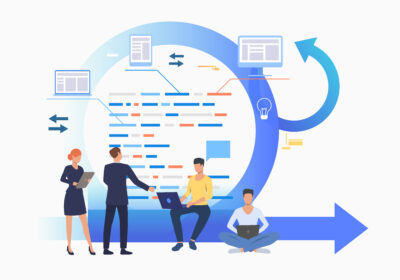
Social coding isn’t about GitHub stars or public repositories. At its core, it’s about developers working transparently, sharing context in real time, and treating contributions as collaborative artifacts rather than isolated tasks.
In practice, this looks like:
- Collaborative design discussions happening in the open before code is written.
- Shared ownership of repositories across teams, not siloed modules.
- Asynchronous collaboration where decisions and rationale are documented for everyone.
- Feedback culture that values knowledge-sharing over gatekeeping.
Enterprises that adopt social coding borrow from open source not just tools, but the ethos: build together, not in isolation.
Why Pull Requests Aren’t Enough
Pull requests are a powerful tool for code review, but they have limits when scaled to enterprise environments.
- Latency in delivery: Waiting for approvals slows down fast-moving projects.
- Fragmented knowledge: Context is often locked in comments, not reusable across teams.
- Compliance gaps: PR reviews don’t automatically equal governance.
- Developer burnout: Endless back-and-forth cycles create bottlenecks.
Social coding expands the scope. Instead of code reviews as checkpoints, collaboration is continuous, before, during, and after the pull request.
How Social Coding Shapes Enterprise Outcomes
Stronger Software Design
When design debates happen in public threads, with broad participation, architectural choices are more resilient. Teams get early buy-in and avoid rework.
Faster Onboarding
New developers learn by watching conversations, reviewing decisions, and browsing shared discussions. This creates a living knowledge base.
Improved Security
Open collaboration surfaces risks earlier. Security teams, SREs, and developers can all participate in discussions, treating security as part of the conversation, not a late-stage audit.
Cross-Team Alignment
Social coding breaks silos. Instead of one team “owning” a system, multiple teams contribute through well-documented discussions, ensuring continuity and reducing bus factor risks.
What Enterprises Need to Adopt Social Coding
- The Right Platforms
Internal GitHub-like platforms, collaborative wikis, and chat-integrated code review tools make social coding natural. - Cultural Buy-In
Leadership needs to encourage openness, where developers feel safe proposing changes and sharing ideas. - Governance Without Friction
Security and compliance must be embedded into collaboration flows, automated checks, policy-as-code, and AI-assisted review, not enforced as an afterthought. - Metrics That Matter
Track collaboration quality, knowledge distribution, and cycle times, not just PR counts.
The Verbat Perspective
At Verbat, we believe that enterprise software thrives when collaboration mirrors open-source practices. Pull requests are a tool, but social coding is the mindset. By integrating DevOps pipelines with transparent collaboration platforms, adding AI-assisted reviews, and building governance directly into developer workflows, we help enterprises unlock speed and resilience at scale.
From PRs to Participation
Pull requests will remain part of enterprise workflows, but they’re no longer the centerpiece. The future of enterprise software is shaped by participation, not permissions, where developers, architects, and security teams work in the open, build trust, and co-own outcomes.
Social coding doesn’t just ship better code, it builds stronger organizations.