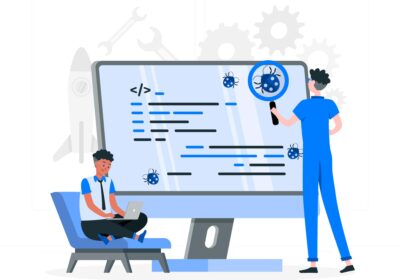
For decades, pair programming has been a staple of agile teams—two developers, one keyboard, real-time collaboration. With the rise of AI assistants like GitHub Copilot, ChatGPT, and Codeium, we now have a new variation: AI pair programming. One human, one machine, both writing code.
But as with every leap in developer productivity, the benefits come with trade-offs. Is AI pair programming the next frontier of efficiency—or a ticking time bomb of hidden technical debt?
The Productivity Promise
AI pair programming tools have already proven their ability to accelerate development cycles. Developers can generate boilerplate, unit tests, and even entire service scaffolds in minutes. Key advantages include:
-
Faster Iteration: AI fills in routine code so developers can focus on higher-level design and logic.
-
Improved Onboarding: New developers get contextual code suggestions aligned with the existing codebase.
-
Enhanced Exploration: Developers can quickly test approaches without fully committing resources.
For many teams, this translates into shorter sprints, reduced backlog pressure, and more experimental freedom.
The Hidden Risks
Yet, velocity isn’t the same as progress. AI-generated code introduces subtle risks that may outpace governance:
-
Shallow Understanding: Developers may accept AI suggestions without fully grasping the implications.
-
Inconsistent Quality: AI output mirrors training data, which may not reflect the team’s coding standards.
-
Technical Debt Accumulation: Quick fixes pile up, and shortcuts hidden in AI code can erode long-term maintainability.
-
Security Blind Spots: AI may generate insecure or non-compliant code unless rigorously reviewed.
Without guardrails, the illusion of productivity may mask a growing debt load that future teams must pay off.
Balancing Speed With Discipline
The key isn’t rejecting AI pair programming—it’s adopting it with engineering discipline:
-
Code Reviews Are Non-Negotiable: Every AI contribution must undergo peer review.
-
Style and Security Linters: Automated checks enforce standards before code reaches production.
-
Knowledge Sharing: Developers should annotate and document AI-driven changes to preserve team understanding.
-
Selective Usage: Use AI for repetitive scaffolding and testing, not for critical system design decisions.
Done right, AI becomes a force multiplier. Done wrong, it’s a shortcut that leaves teams with brittle systems.
The Verdict
AI pair programming is neither a silver bullet nor a guaranteed liability. It is a tool—and like all tools, its impact depends on how teams wield it.
-
For organizations that pair speed with governance, AI can free developers to focus on creativity and innovation.
-
For teams that chase velocity without process, it risks becoming a technical debt factory in disguise.
The real question isn’t whether AI pair programming works—it’s whether your development culture is ready to harness it responsibly.