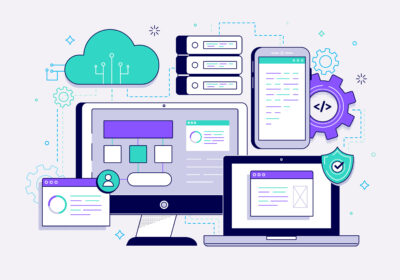
Modern web applications are more connected than ever before.
Very few businesses build every component of their digital ecosystem from scratch. Instead, organizations rely on a growing network of third-party services to accelerate development, improve functionality, and enhance customer experiences. Payment gateways, analytics platforms, customer support tools, cloud services, authentication providers, marketing automation platforms, AI services, and countless APIs have become standard components of today’s web applications.
This interconnected approach offers significant advantages. Businesses can innovate faster, reduce development costs, and bring new capabilities to market without building everything internally.
However, there is a growing concern that many organizations are only beginning to fully understand.
Every integration that adds value to a web application also introduces a potential security risk.
As businesses continue expanding their digital ecosystems, third-party integrations are becoming one of the most overlooked sources of cybersecurity exposure.
The challenge is no longer just securing the application itself.
It is securing the entire network of external systems connected to it.
Modern Applications Depend on More Third Parties Than Ever
A decade ago, a typical business application may have relied on a relatively small number of external services.
Today, even a moderately complex web application can interact with dozens of third-party platforms.
A single customer transaction might involve:
- identity verification services,
- payment processors,
- CRM systems,
- cloud databases,
- analytics tools,
- email delivery platforms,
- fraud detection services,
- customer support systems,
- and AI-powered recommendation engines.
From a business perspective, these integrations create seamless user experiences.
From a security perspective, they significantly expand the organization’s attack surface.
The more external services involved, the more potential points of vulnerability exist within the ecosystem.
Your Security Is Only as Strong as Your Weakest Vendor
One of the most challenging aspects of third-party integrations is that businesses often have limited control over the security practices of external providers.
An organization may invest heavily in:
- application security,
- penetration testing,
- access management,
- encryption,
- and compliance frameworks.
Yet a vulnerability within an integrated third-party service can still create risk.
Cybercriminals increasingly target vendors, service providers, and software supply chains because these environments often provide indirect access to multiple organizations simultaneously.
In many cases, attackers view third-party providers as easier targets than the businesses that depend on them.
This reality has fundamentally changed how organizations must think about risk management.
APIs Have Become Prime Attack Targets
Most modern integrations rely on APIs.
APIs enable applications to exchange information quickly and efficiently, making them essential for digital transformation initiatives.
However, APIs have also become one of the fastest-growing attack vectors in enterprise environments.
Poorly secured APIs can expose:
- customer information,
- financial data,
- authentication tokens,
- operational records,
- and business-critical services.
The challenge becomes even greater when organizations lose visibility into the growing number of APIs operating across their environments.
Many businesses struggle to maintain a complete inventory of all active integrations, making it difficult to identify vulnerabilities before attackers do.
As API ecosystems expand, security teams face increasing pressure to manage risks that were virtually nonexistent a decade ago.
Excessive Permissions Create Hidden Exposure
Many third-party tools require access to business systems in order to function effectively.
Over time, organizations often grant broad permissions to accelerate implementation and simplify operations.
Initially, these permissions may seem harmless.
However, as integrations accumulate, businesses frequently discover that external applications have access to significantly more data and functionality than necessary.
This creates a dangerous situation.
If a third-party service is compromised, attackers may inherit the same level of access granted to that service.
The principle of least privilege has become increasingly important because excessive permissions can dramatically amplify the impact of a security incident.
Supply Chain Attacks Are Becoming More Common
The rise of supply chain attacks has changed how businesses evaluate cybersecurity risks.
Instead of attacking organizations directly, threat actors increasingly target software vendors, managed service providers, and technology partners.
By compromising one trusted provider, attackers may gain access to hundreds or thousands of customer environments.
These attacks are particularly dangerous because they exploit existing trust relationships.
The compromised software or service often appears legitimate, allowing malicious activity to remain undetected for longer periods.
For organizations relying heavily on third-party integrations, supply chain security is no longer a theoretical concern.
It has become a strategic risk management priority.
Shadow Integrations Create Visibility Problems
Not all integrations are implemented through formal IT processes.
Business teams often adopt new SaaS platforms and connect them to existing systems without involving security teams.
Marketing departments may integrate analytics tools.
Sales teams may connect customer engagement platforms.
Operations teams may deploy workflow automation services.
While these decisions often improve efficiency, they can also create security blind spots.
Organizations may be unaware of:
- what data is being shared,
- where it is being stored,
- who has access to it,
- or how it is being protected.
As digital ecosystems grow, maintaining visibility becomes one of the biggest challenges in integration security.
Compliance Risks Extend Beyond Internal Systems
Regulatory requirements continue expanding across industries.
Organizations must now comply with increasingly strict expectations around:
- data privacy,
- customer information protection,
- access controls,
- auditability,
- and security governance.
The challenge is that compliance responsibilities often extend beyond internal systems.
Businesses remain accountable for how customer data is handled even when it passes through third-party platforms.
A security incident involving an external vendor can still result in:
- regulatory scrutiny,
- financial penalties,
- legal exposure,
- and reputational damage.
This makes vendor security assessment an essential part of compliance management.
AI Integrations Are Creating New Security Questions
Artificial intelligence is accelerating integration growth across industries.
Organizations are rapidly connecting web applications to:
- AI chatbots,
- recommendation engines,
- predictive analytics platforms,
- document processing tools,
- and generative AI services.
While these capabilities offer significant business value, they also introduce new security considerations.
Questions around:
- data sharing,
- model access,
- information retention,
- user privacy,
- and AI governance
are becoming increasingly important.
As AI adoption grows, organizations must ensure that innovation does not outpace security oversight.
Security Requires Continuous Monitoring
One of the biggest misconceptions about third-party integrations is that security can be addressed during implementation and then largely forgotten.
In reality, integration security requires ongoing attention.
Vendors update software.
APIs evolve.
Access permissions change.
Business requirements shift.
Threat landscapes continuously develop.
An integration that was secure twelve months ago may introduce new risks today.
Organizations must adopt continuous monitoring practices that provide visibility into how external services interact with business systems over time.
Without that visibility, risks can accumulate unnoticed.
Trust Must Be Verified, Not Assumed
Perhaps the most important lesson businesses are learning is that trust alone is not a security strategy.
Third-party providers may be reputable, well-established, and highly capable.
However, every integration still represents a connection that must be monitored, governed, and secured.
Modern security strategies increasingly focus on verification rather than assumptions.
Organizations are implementing:
- Zero-Trust principles,
- stronger vendor assessments,
- API security frameworks,
- continuous monitoring,
- and stricter access controls.
The objective is not eliminating integrations.
The objective is ensuring that convenience does not create unacceptable risk.
How Verbat Technologies Helps Organizations Secure Integration Ecosystems
Verbat Technologies helps organizations build secure, scalable web application ecosystems while maintaining visibility and control across third-party integrations.
Their expertise includes:
- web application development,
- API security implementation,
- cloud-native architecture,
- Zero-Trust security frameworks,
- enterprise integration management,
- cybersecurity consulting,
- and secure digital transformation strategies.
By helping businesses evaluate, secure, and govern complex integration environments, Verbat enables organizations to innovate confidently while reducing exposure to emerging cyber threats.
Final Thoughts
Third-party integrations have become essential to modern web applications.
They enable businesses to innovate faster, deliver richer experiences, and connect with powerful digital services that would be difficult to build internally.
But every integration introduces a new layer of risk.
As application ecosystems become increasingly interconnected, organizations must recognize that security extends far beyond their own code and infrastructure.
The future of web application security will depend not only on protecting internal systems but also on understanding, managing, and continuously monitoring the growing network of external services that power modern digital experiences.
Because in today’s connected world, attackers do not always need to break through your front door.
Sometimes they simply walk in through a trusted connection you already invited inside