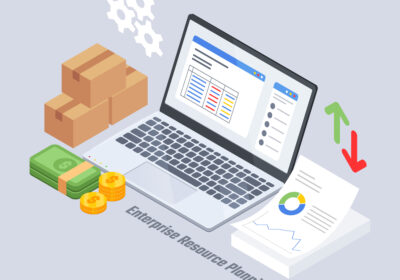
The Enterprise Resource Planning system used to be a place where businesses stored data, managed workflows, and kept operations running smoothly in the background. But 2025 marks a dramatic shift in what ERP means to an organization.
ERP is no longer a passive system you “use.”
It’s becoming a strategic brain, an intelligent layer that interprets data, understands patterns, predicts outcomes, and helps leaders make faster, sharper, and more profitable decisions.
And at the center of this evolution is AI.
In this blog, we’ll explore how AI is transforming ERP from a system of record into a system of insight, and what that means for enterprises ready to scale smarter.
The Evolution of ERP: From Storage to Strategy
For decades, ERP was a tool for storing and organizing information, finance, HR, inventory, procurement, sales, and more. It was essential, but not strategic.
It required human interpretation, manual data extraction, and periodic analysis before it could influence decision-making.
Now the paradigm has shifted.
AI-powered ERP systems analyze, predict, and recommend, in real time.
Instead of asking ERP “what happened?”, organizations now ask “what should we do next?” and the system has an answer grounded in data.
Why AI Turns ERP Into a Strategic Brain
AI allows ERP to function more like a decision engine than a workflow tool. Here’s how:
Real-Time Interpretation of Business Data
Traditional ERP data was reactive. AI-enabled ERP processes continuously, identifying patterns that humans can’t see at scale.
Inventory spikes, customer churn patterns, late payments, cost leaks, AI spots them instantly.
Predictive Forecasting
Whether it’s sales, supply chain delays, procurement cycles, or cash flow needs, AI models inside ERP anticipate trends and help leaders act ahead of time.
Forecasting shifts from “best guess” to “data-driven probability.”
Automated Decisions & Recommendations
AI doesn’t just present data, it recommends actions.
Approve a procurement order
Delay a shipment
Flag a financial risk
Recommend staffing changes
Optimize pricing
ERP becomes a partner, not a tool.
Intelligent Workflows
Every workflow, HR onboarding, financial close, purchase approval, gets smarter.
AI observes how teams work and gradually optimizes processes to remove friction and reduce manual steps.
Traditional workflows break; intelligent workflows adapt.
Where AI-Driven ERP Creates the Most Impact
The practical wins of AI inside ERP are far-reaching. Here are the strongest impact areas businesses will see in 2025:
Finance: Real-Time Visibility and Predictive Control
AI enhances ERP finance modules by automating reconciliation, predicting expenses, identifying anomalies, and guiding CFOs on operational decisions.
Month-end becomes effortless.
Cash-flow insights become minute-by-minute.
Supply Chain: From Reactive to Self-Correcting
With AI, ERP detects disruptions early, vendor delays, demand spikes, logistics issues, and autonomously suggests alternatives.
Supply chains shift from tracking what’s wrong to preventing what could go wrong.
HR: Smarter Workforce Planning
ERP becomes a strategic brain for talent:
Predicting attrition
Optimizing hiring cycles
Recommending role changes
Mapping skill gaps
For HR teams, the system works like an intelligence analyst.
Manufacturing & Operations: Autonomic Optimization
AI creates digital twins, monitors machine data, predicts failure, and optimizes production sequences.
Downtime drops. Efficiency climbs.
Operations run like a self-adjusting engine.
ERP as the Intelligence Layer of the Enterprise
The real transformation comes when ERP becomes the unified intelligence layer across the organization:
Data → Insight
Insight → Action
Action → Automation
Automation → Strategy
This means businesses no longer rely on scattered tools, siloed insights, or static dashboards.
Your ERP becomes the single source of truth and the source of strategy.
It connects every department and defines the rhythm of decision-making.
What Businesses Need to Unlock an AI-Driven ERP
Transitioning to an intelligent ERP system requires a shift in architecture and mindset:
Clean, Unified Data
AI only works as well as the data behind it.
Consolidation and standardization matter more than ever.
A Cloud-First ERP Infrastructure
Scalability, real-time processing, and microservices-driven extensions create the foundation needed for intelligence.
AI Governance and Change Management
People must trust the system.
Processes must adapt to a model where some decisions are AI-guided or AI-executed.
Integration with Modern Tools
CRMs, data lakes, BI platforms, and IoT devices must plug into the ERP’s brain to fuel contextual intelligence.
Final Takeaway
ERP is stepping into its most influential era yet, not as software, but as a strategic brain.
AI transforms enterprise data into decisions, decisions into actions, and actions into measurable business value.
Organizations that embrace AI-enabled ERP early will operate with an advantage others can’t emulate:
The ability to think in real time at enterprise scale.